Factory Line · System
Context layers
This is how the platform stores the instructions that make outputs good, so your team is not rebuilding prompts from scratch on every job.
Plain-English view
A strong AI workflow usually needs more than one prompt. It needs reusable company guidance, reusable workflow guidance, reusable option sets, and then a job-specific brief. Factory Line separates those layers so teams can improve the reusable parts without rewriting the whole job every time.
The result is simple: people can choose the right options, add the facts for this one job, and get a better starting point than a blank prompt box.
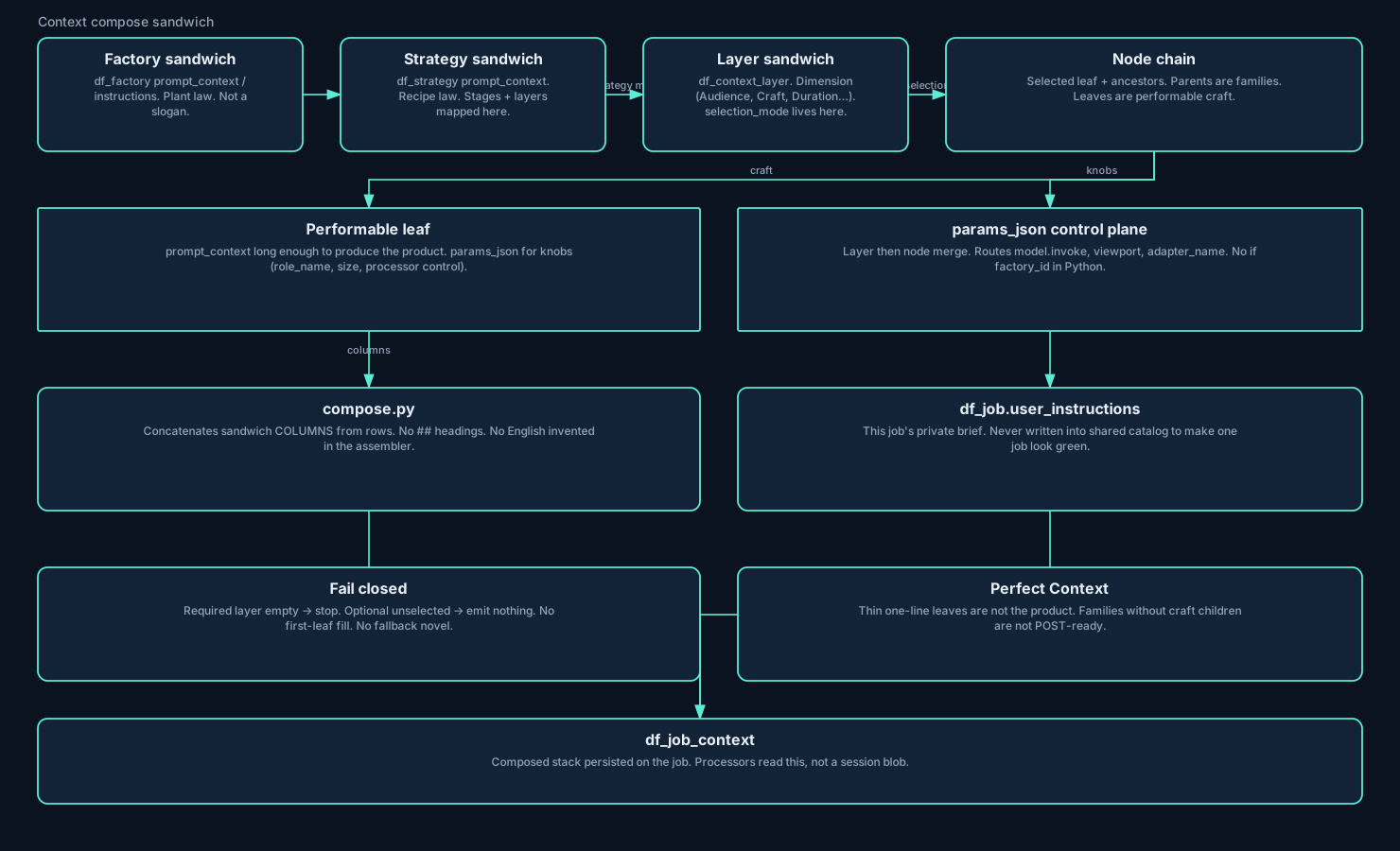
How the stack comes together
Factory
  → Strategy
  → Context layer 1
  → Context layer 2
  → Context layer 3
  → ...
  → Job brief / job data
  → Processor or model request
That middle section is intentionally open-ended. Some workflows need two layers. Others need ten. The point is that reusable guidance is stored as rows, not trapped in one giant prompt or hard-coded in Python.
factory.compose
  → strategy.compose
  → for each mapped layer (strategy map only)
       layer.compose
       → selected node ancestor chain (parent family → performable leaf)
  → job.user_instructions
Required context with nothing selected stops the job. Optional context can stay empty. The platform does not quietly invent missing guidance, because that creates inconsistent results and hides what actually needs to be fixed.
What gets stored in a reusable option
Reusable guidance
This is the descriptive instruction set that teaches the model what good looks like for that option. It should be detailed enough to be genuinely useful, not just a catchy label.
Operational settings
Some options also carry settings such as size, adapter choice, asset role, or duration. Those settings tell the workflow how to run without hard-coding product-specific logic into the engine.
In technical terms, this is where shared craft and operational controls meet. In buyer terms, this is how a team stops losing its best prompting and workflow decisions.
If you can dream it, you can build it
The same stack shape can support very different factories. You are not buying one prompt trick. You are buying a pattern for defining reusable context and then letting the data drive the run.
| Factory | Reusable layers might include | Job data for this run |
|---|---|---|
| Image factory | Brand rules, camera style, lighting, subject craft, output size | The campaign brief and the specific asset request |
| Course factory | Teaching voice, audience level, section structure, formatting rules | The lesson topic and the examples for this lecture |
| Paparazzi research | Capture law, extraction rules, evidence format, destination roles | The URL and what the operator needs captured |
| Payroll | Jurisdiction rules, pay cadence, approval requirements, output package rules | The timesheet rows and who needs to be paid |
What data-driven means in plain English
In a script-heavy design, developers keep writing code to inspect data, decide what it means, and route it into the right branch. That is where teams lose weeks and months.
Script-first
if payroll == "weekly":
    run_weekly_payroll()
elif payroll == "biweekly":
    run_biweekly_payroll()
...
Data-driven
timesheet.processor_id = "weekly_payroll"
timesheet.strategy_id = "weekly_default"

engine.run(timesheet)
The row already knows which processor is best to process it. That means the engine can stay stable while the data tells it what operation to do. You are not forced to keep changing engine code every time a business rule or workflow changes.
The quality rule behind it
Before a workflow is treated as real, its reusable instructions need to be complete enough to produce a serious result. A slogan is not enough. The point is to build from strong context first, not to hope weak setup magically becomes strong output later.
For developers, the technical names here are prompt_context, layer selections, and fail-closed compose rules. For managers, the simpler idea is: good reusable instructions are an asset, and the platform forces the team to take them seriously.